
With fashion as the thread and digital intelligence as the shuttle: Shenzhen and Milan “weave” a new global network of cooperation
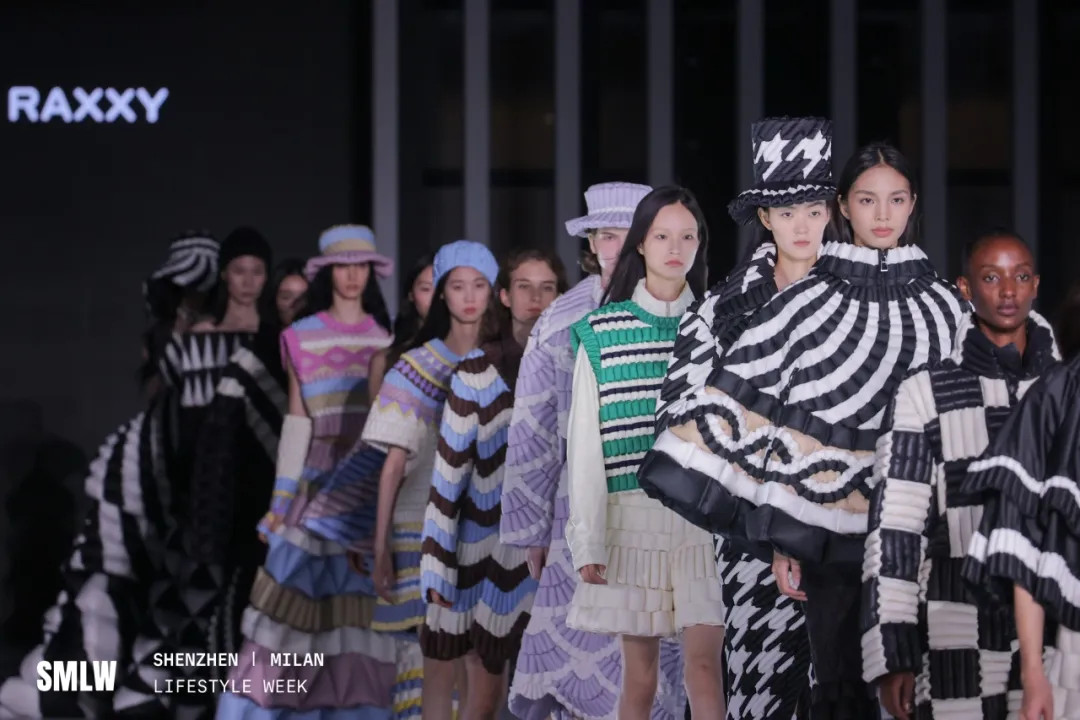
From July 17 to 19, the 2026 Shenzhen-Milan Twin Cities Fashion Week, themed “Digital and Intelligent Fashion: An Eastern Expression,” was held in Longhua, Shenzhen. Over the course of three days, Chinese and Italian brands presented joint runway shows, showcasing a fusion of Eastern and Western cultures. Numerous guests from Italy, Peru, Malaysia, South Korea, and other countries and regions engaged in in-depth discussions on fashion, technology, culture, and industry.
“Milan is world-renowned as the capital of design and fashion. Shenzhen, meanwhile, has emerged as a global hub for innovation, advanced manufacturing, and new technologies thanks to its extraordinary vitality. ”As Tommaso Sacchi, Deputy Mayor of Milan, put it, if Milan represents the classic expression of global fashion, then Shenzhen is constantly writing a new narrative of innovation for the future. These two cities, which may seem distant from one another, have come together through fashion and are drawing ever closer through innovation.
From 2024 to 2026, the Shenzhen-Milan Twin Cities Fashion Week has been running for three years, evolving from a “China-Italy bilateral” initiative to a multilateral collaboration centered on “deepened China-Italy ties + Asia-Pacific cooperation.”
There are also more possibilities for the future of the Shenzhen-Milan Twin Cities Fashion Week.
Fashion in the Twin Cities: From“Go Out"to“Co-creation"
On the evening of July 17, at the Dalang Fashion Town opening night, the flowing sleeves of Cantonese opera performers intertwined with the catwalk strides of Western models, while giant sea turtles glided through the air. Cantonese opera, giant sea turtles, international supermodels, and digital light and shadow combined to create a unique Eastern fashion narrative. Under the "Flying Heaven" screens and a dazzling light show, Italian brands Domenico Orefice, Casa Preti, and momonì shared the runway with Chinese brands HUI and RAXXY Ruixi. The convergence of Italian tailoring and Eastern aesthetics on a single runway provided a vivid illustration of the "Dual-City Fashion" concept.
Standing on the runway and watching Chinese and Italian brands showcase their collections side by side, Zhao Huizhou—a Chinese fashion designer and founder of Yizhi Hui Fashion Group—reflected that the significance of the Twin Cities Fashion Week lies not only in presenting a fashion extravaganza, but also in building a bridge for ongoing exchange and collaboration between the Chinese and Italian fashion industries. “In the past, whether Chinese brands were expanding overseas or Italian brands were entering China, there was no bridge connecting the two.”
“Everyone can come together on the same runway to exchange ideas, engage in creative dialogue, blend styles, and express themselves. This allows all audience members to experience the fashion appeal of Chinese Eastern aesthetics while also witnessing the exquisite craftsmanship of Italian brands in terms of fabrics, workmanship, and design styles.” said Feng Changhong, Chairperson of the China Industrial Design Collaborative Innovation Platform and President of the Shenzhen Industrial Design Industry Association.
For Feng Changhong, this scene feels more like the answer he has arrived at after fifteen years of exploration.
In 2009, Shenzhen made its first attempt to participate in the 100% Design exhibition in London but was rejected nine times in a row. It wasn’t until 2011 that Shenzhen truly went global and made its debut at the 100% Design exhibition in London. At that time, Chinese design was striving to prove that it was “not merely a copy” but possessed its own originality; by 2025, Shenzhen had brought robotics, digital technology, and intangible cultural heritage design to Milan—a move described by Xinhua News Agency as “Chinese Design Going Global 2.0”; today, Chinese and Italian brands truly stand together on the same stage to showcase their creativity.
Feng Changhong believes this signifies that Shenzhen’s design sector has moved from “going global” to “co-creation.”
This transformation is driven not merely by a single fashion event, but by Shenzhen’s comprehensive industrial ecosystem. Today, the Dalang Fashion Town has attracted more than 700 fashion enterprises and over 300 independent brands, and is home to nine designers who have won China’s “Golden Peak Award” for fashion design, forming a complete system where design, manufacturing, branding, and the supply chain develop in tandem. From AI-assisted design and digital R&D to smart manufacturing, technology is continuously reshaping the traditional fashion industry. Prior to the opening, international guests visited Yizhi Hui, New Balance, and Ying’er. They were deeply impressed by the closed-loop, full-ecosystem approach of Dalang’s fashion enterprises—spanning AI design, production, supply chain, finished products, and branding.
Simone Guidarelli, a renowned Italian fashion stylist and creative director, said that what impressed him most was not the technology itself, but the fact that Shenzhen designers truly use technology as a creative language rather than merely as a visual effect. “Shenzhen has shown me that innovation and cultural identity can blend together very naturally.”
At the inaugural Twin Cities Fashion Week three years ago, Shenzhen was primarily introducing itself to the world; now, an increasing number of international brands are actively participating, joining Shenzhen in exploring the future of fashion. The international fashion industry’s perception of Shenzhen’s fashion ecosystem has made a qualitative leap from “observation and understanding” to “recognition and respect.”
Twin Cities Culture: An International Language of Eastern Expression
If the runway showcases fashion, then “Digital and Intelligent Fashion: The Gravitational Field of Eastern Expression” showcases Shenzhen’s unique interpretation of Eastern aesthetics.
The five chapters—"Arrival," "Tracing Origins," "Convergence," "Rebirth," and "Homecoming"—weave together a narrative journey that bridges tradition and the future. Guided by the philosophy that “fashion is the form, technology is the backbone, and culture is the soul,” silk threads, ceramics, jewelry, digital interactions, and smart devices collectively create an immersive experience centered on the Eastern way of life. The organizers explained the curatorial vision: “Gravity Field” is more than just an exhibition; it captures the attention not only of Shenzhen and Milan, but also of all of China and the world. Eastern aesthetics, the fusion of Eastern and Western cultures, artistic dialogue, and design collaboration—all these elements converge here.
Maria Jole Serreli, the artistic director of “Digital and Intelligent Fashion: The Gravitational Field of Eastern Expression,” hopes that this will be more than just an exhibition—that it will foster mutual understanding between cultures. “These exhibits are not merely works of art; they are vessels that bridge traditional craftsmanship and cutting-edge technology.” She believes that Shenzhen’s most distinctive feature is “its continuous effort to breathe new life into traditional culture through technology, while also enabling more Europeans to rediscover Shenzhen through design.”
During the Twin Cities Fashion Week, a series of events—including the China-Italy Cultural Exchange and the Luhu Fashion Night—were held one after another, where guests bonded through culture and shared their emotions through music. From the historical legacy of Milan’s Sforza Castle to the innovative transformation of the Longhua Guanlan woodblock prints; from the preservation and promotion of urban cultural IPs to the improvised symphony blending traditional Ruan music with electronic music—different civilizations inspired and illuminated one another through cultural exchange.
Han Han, an Associate Professor in the Department of Design at Shenzhen University and a Ph.D. in Design from the Polytechnic University of Milan in Italy, participated in the entire China-Italy Cultural Exchange Conference. She noted that as Shenzhen and Milan shared representative cultural projects from their respective cities, the discussion went beyond a mere exchange of experiences: “Through dialogue and the exchange of ideas, both sides opened up new avenues for cooperation and found the experience mutually inspiring.”
Whether through “Gravity Field” or exchange events, cross-cultural expression has allowed her to see a deeper layer of meaning. Han Han, editor-in-chief of the *Blue Book of World Design Capitals*, has conducted in-depth academic observations on the relationship between the two cities. She believes that the greatest commonality between Shenzhen and Milan lies in the fact that both regard design as a key driver of urban development. The difference lies in the fact that Milan possesses a rich historical heritage, while Shenzhen embodies the innovative vitality of a city of the future; these two distinct urban characters form a highly valuable complementary relationship.
“Milan hopes to tell its historical stories well while passing on its culture through innovative means. A key characteristic of Shenzhen is that we are constantly creating the city’s culture—both for the present and the future. Combining Milan’s historical heritage and innovative spirit with Shenzhen’s rapid transformation, highly efficient generation of new ideas, and the value chain’s ability to respond swiftly to bring those ideas to life—I believe the two cities have tremendous potential for growth in the fashion, creative, and design industries.”
Han Han particularly noted that the English name for this year’s event is “Lifestyle Week,” rather than the traditional “Fashion Week.” In her view, fashion is no longer just about clothing; it is a lifestyle, a comprehensive industrial system, and an important medium for cultural exchange. From creativity and design to manufacturing and promotion, fashion is becoming a vital language that connects technology, culture, and industry.
This is precisely the significance of “Eastern Expression”—not merely showcasing traditional culture, but enabling Eastern culture to find new forms of international expression in the digital age.
From Bilateral to Multilateral: Cooperation Is Continuously Growing
Compared to the previous two editions, the biggest change in this year’s Twin Cities Fashion Week is the continuous expansion of its partnerships.
In addition to Italy, this year’s event welcomed guests from Peru, Malaysia, South Korea, and many other countries and regions. Over the course of three days, the organizers hosted a series of events titled “Digital and Smart Fashion: A Journey of Exploration and Connection,” during which guests visited the Yizhi Hui Centennial Fashion Museum, the New Belle Industrial Park, the Ying’er Fashion Group headquarters, the China·Guanlan Original Printmaking Industrial Base, the HarmonyOS User Center, Huichuan Technology, and the Guanlan Old Town, among other locations, to experience firsthand the integration of Shenzhen’s fashion industry, technological innovation, and cultural development.
From corporate digital showrooms to smart car interiors, and from printmaking workshops to century-old historic markets, the guests kept stopping to chat, take photos, and engage in in-depth discussions with company executives, designers, and artists. These immersive tours also provided more concrete scenarios for industrial collaboration.
Victor Gustavo Freundt Melendez, director of the Peru Fab Lab, believes that what is most值得 learning from Shenzhen is the seamless integration between technology, design, industry, and the innovation ecosystem. He proposed that, building on the Shenzhen-Milan partnership, Peru’s capital, Lima, could be included to form a three-city cooperation framework among Shenzhen, Milan, and Lima. With the fashion industry serving as a bridge, this framework would promote cultural and economic exchanges between China and Peru.
Carlos Antonio Mondragon Velasquez, advisor to the president of Peru’s National Council for Science, Technology, and Innovation (CONCYTEC), stated that he hopes to further deepen cooperation through the “China-Peru Innovation and Design Hub,” which was signed during the Twin Cities Fashion Week, to connect universities, research institutions, enterprises, entrepreneurs, designers, and public organizations in both countries, thereby creating value for Peru and China by supporting collaborative research, technology transfer, talent development, and various innovation projects. “I hope this will mark the beginning of a long-term partnership that not only drives the development of the creative industries but also fosters cooperation between the two sides in broader science, technology, and industrial sectors.”
Li Jianye, a member of the International Affairs and Government Affairs Bureau of the Malaysian Chinese Association Youth Wing, described the cooperation between Shenzhen and Milan as “a combination of imagination and execution.” In his view, Milan excels at shaping the international fashion narrative, while Shenzhen possesses the ability to rapidly bring creative ideas to life and integrate industrial resources. What the two cities have created together is not merely a product, but a new model of international cooperation.
This is also one of the most distinctive features of the 2026 Shenzhen-Milan Twin Cities Fashion Week: the event capitalizes on two major international milestones—the 56th anniversary of the establishment of diplomatic relations between China and Italy and the APEC meeting in Shenzhen—to create a platform for digital and smart fashion cooperation that fosters mutual learning between China and Italy and promotes multilateral collaboration across the Asia-Pacific region.
As Han Han said, in the future, the Shenzhen-Milan Twin Cities Fashion Week will not only connect Shenzhen and Milan, but will also become an important platform for fashion exchange and cooperation among cities in the Asia-Pacific region and around the world.
Epilogue: The Next Three Years(math.) genusUnlimited Imagination
Three years ago, Shenzhen hoped to reach the world through fashion; three years later, the world is finding its way to Shenzhen through fashion. Where will the Twin Cities Fashion Week head in the next three years?
Feng Changhong refers to her vision for the future as the “3.0 era” of Chinese design going global. She said she hopes that future cooperation between the two cities will go beyond simply bringing their respective products to each other’s cities for display, and instead involve jointly creating new products, new brands, and new value. Shenzhen boasts world-leading technological innovation and a consumer electronics industry, while Milan has a rich heritage in fashion design. If the two sides collaborate on research, development, and design, “the next products to appear on the international stage will no longer be just from Shenzhen or Milan, but new brands created jointly by both sides. At that point, we will have truly entered the 3.0 era.”
Han Han said that the most distinctive feature of the Twin Cities Fashion Week is that it serves as an ongoing platform for international cooperation, rather than just a one-time event. Looking to the future, she hopes the platform’s role will continue to expand, with each edition serving as a new starting point for collaboration, allowing design resources, industry projects, and talent exchanges to continue to grow and flourish beyond the event itself.
Víctor Gustavo Frente Meléndez’s vision for “Three Cities, One Creation” aligns perfectly with Li Jianye’s own ideas; both hope that, in the future, the unifying power of the Twin Cities Fashion Week platform will enable more cities to connect through design, technology, and fashion, forming an ever-expanding network of international collaboration.
From exhibitions to co-creation, from a twin-city partnership to a multilateral collaboration, and from a single event to a platform that continuously connects global resources—the Shenzhen·Milan Twin Cities Fashion Week continues to expand the boundaries of cooperation. A seed sown three years ago is now sprouting more and more branches and leaves. As depicted in the interactive installation *Flowers in All Forms* from the exhibition “Digital and Intelligent Fashion: A Gravitational Field of Eastern Expression,” fashion, design, technology, and culture from different countries and cities converge here. Diverse creative ideas collide and nourish one another, continuously giving rise to new forms of expression and new possibilities through co-creation.
A World of Possibilities: The Future of the Twin Cities Fashion Week Holds Endless Potential.


